
Learn more about...

Leading Where It Matters Most: Dustin Wright’s Journey in Service to His Community
April 24, 2026
By Kiersten Caputy

by Kiersten Caputy
For Dustin Wright, BS ’02 and PhD ’15, serving as Superintendent of City of Fairfax Schools is both a professional milestone and a deeply personal responsibility.
Wright leads the school division in a community where he lives, raises his family, and stays closely connected to the daily experiences of students and families. That connection influences how he approaches his role in leading a school system.
“What feels most meaningful to me is the deep sense of responsibility that comes with serving as superintendent in a community I call home,” Wright said. “I am not only the superintendent of the City of Fairfax Schools, but also a City resident and a parent with children in the school system.”
For Wright, the role carries significance beyond the professional title. “That personal connection sharpens everything,” he said. “The decisions we make are not abstract. They affect my own children, my neighbors, and the community I am invested in for the long term.”
Leading the City of Fairfax Schools represents an opportunity to serve a community that has shaped his own family’s life. “This role represents both professional trust and personal commitment,” Wright explained. “It is an opportunity to serve a community that has given so much to my family, and to help steward a school system that plays a central role in the life of the City.”
His path to educational leadership began years earlier at George Mason University, where he first studied music education as an undergraduate. Those early experiences in the arts played a formative role in shaping his leadership philosophy.
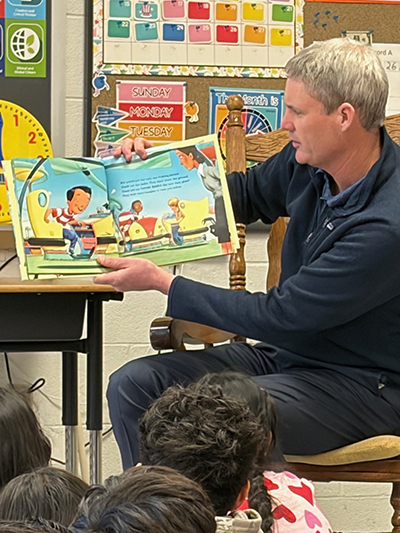 Dustin Wright
“As an undergraduate, I was a music education major, and my experience in the arts profoundly shaped who I am as a leader,” Wright said. “Through music education, I learned the importance of collaboration, discipline, and shared accountability.”
Performing and teaching music required careful preparation and perseverance, lessons that continue to guide him as a superintendent. “I learned how to perform and teach under pressure, how to prepare intentionally, and how to persevere through setbacks,” Wright said. “Those experiences built resilience and adaptability, skills I draw on daily when navigating complex challenges and high-stakes decisions.”
Music also reinforced the importance of teamwork and shared purpose. “Music education taught me that excellence is rarely achieved alone, and that success depends on trust, practice, and a deep commitment to a collective goal,” he said.
Years later, Wright returned to George Mason’s College of Education and Human Development (CEHD) to pursue a PhD in Education from CEHD, an experience he describes as transformative in a different way.
“The doctoral experience sharpened my thinking, pushed me to interrogate my own assumptions, and helped me develop a leadership philosophy grounded in evidence, reflection, and humility,” he said.
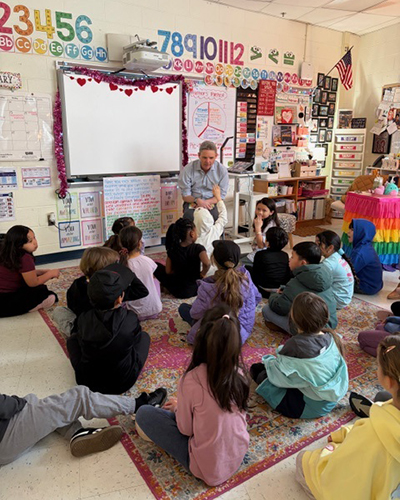 Dustin Wright
Through his doctoral work in CEHD, Wright gained a deeper appreciation for the importance of thoughtful leadership.
“George Mason reinforced that good leadership is not about having all the answers,” he said. “It is about asking better questions, listening deeply, and leading with purpose and integrity.”
After completing his PhD, Wright continued his connection with CEHD by teaching as an adjunct professor in the Educational Leadership program. “It was a meaningful opportunity to give back to the institution that played such an important role in my professional development,” he said.
Teaching graduate students who were actively working in schools created dynamic classroom conversations grounded in real-world experience. “What I enjoyed most was the ability to connect theory to practice in ways that had immediate relevance,” Wright said. “Using real-life case studies allowed us to engage in learning that could translate directly into impact in schools.”
Those experiences with adult learners continue to influence how he leads teams today. “Adults bring experience, expertise, and strong perspectives,” Wright explained. “Effective leadership requires honoring that while still providing clarity and direction.”
He says his time teaching affirmed several principles that now shape his leadership style. “My experience in the classroom reinforced the importance of psychological safety, relevance, and respect,” Wright said. “People are most motivated when they feel heard, valued, and connected to a shared purpose.”
Throughout his career, Wright has also learned that strong leadership requires navigating complexity with transparency and steadiness. “One of the most important lessons I have learned is that conflict is not something to avoid,” he said. “It is something to navigate thoughtfully.”
In large organizations such as school systems, disagreement is inevitable. Wright believes leaders must create environments where differing perspectives can strengthen decision-making. “What matters is how leaders create structures and cultures where conflict can be productive rather than destructive,” he said.
During difficult moments, he emphasizes the importance of clarity and integrity. “During challenging times, people are looking for honesty, consistency, and a steady presence,” Wright said. “Leaders do not need to have all the solutions, but they do need to communicate clearly, act with integrity, and stay grounded in their values.”
Today, Wright believes school systems must remain focused on their central mission: serving students.
“The reason our schools exist is simple. We exist to serve students,” he said. “Every decision, initiative, and investment should ultimately be measured by how it improves outcomes and experiences for the young people in our care.”
At the same time, he emphasizes that strong outcomes for students depend on the strength of the educators who support them every day.
“The most valuable resource we have in supporting students is our staff,” Wright said. “Teachers, support professionals, administrators, and specialists are the people who make a difference in the lives of students every single day.”
Investing in educators, he says, is essential for long-term success. “If we want the best possible outcomes for students, we must invest in attracting, retaining, and continually developing the highest quality educators,” Wright said.
For current CEHD students and alumni considering leadership roles in education, Wright encourages curiosity and a willingness to step into new challenges. “Leadership paths are rarely linear,” he said. “Some of the most meaningful opportunities emerge when you step into roles that stretch you and challenge your thinking.”
He also emphasizes the importance of preparing students for an evolving world. “Education is evolving rapidly, and the reality is that we do not yet know many of the challenges our students will face in the years ahead,” Wright said. “Our responsibility is to prepare them for a world that is constantly changing.”
Despite the complexity of educational leadership, Wright remains motivated by the opportunity to create meaningful impact. “In education, the decisions we make and the systems we build can impact thousands of students and educators every single day,” he said. “That level of responsibility is both humbling and energizing.”
He is also inspired by the educators who dedicate themselves to supporting students. “Watching talented professionals collaborate, innovate, and care deeply about their students reinforces why this work matters,” Wright said.
As he looks ahead, Wright remains energized by the work and the community he serves. “I truly love this work,” he said. “Every day brings new challenges, new opportunities to learn, and new chances to help make great things happen for our community.”
At its core, he says, educational leadership is about people. “At the end of the day, this work is about people,” Wright said. “It is about supporting our families, empowering our staff, and most importantly, creating the best possible opportunities for our students.”
This story supports the Future Ready Teachers initiative and our priority of reclaiming the narrative around teaching as a profession.