
Learn more about...

If It Isn’t Terrifying, It May Not Be Worth Doing
February 2, 2026
By Kiersten Caputy
For Eric Laurits, MEd ’18, bold ideas have never been abstract thought exercises. They are calls to action. As a graduate of George Mason University’s College of Education and Human Development (CEHD) and a current adjunct faculty member in CEHD’s Elementary Education program, Laurits has spent his career asking one central question: What might education look like if it truly centered community, courage, and possibility?
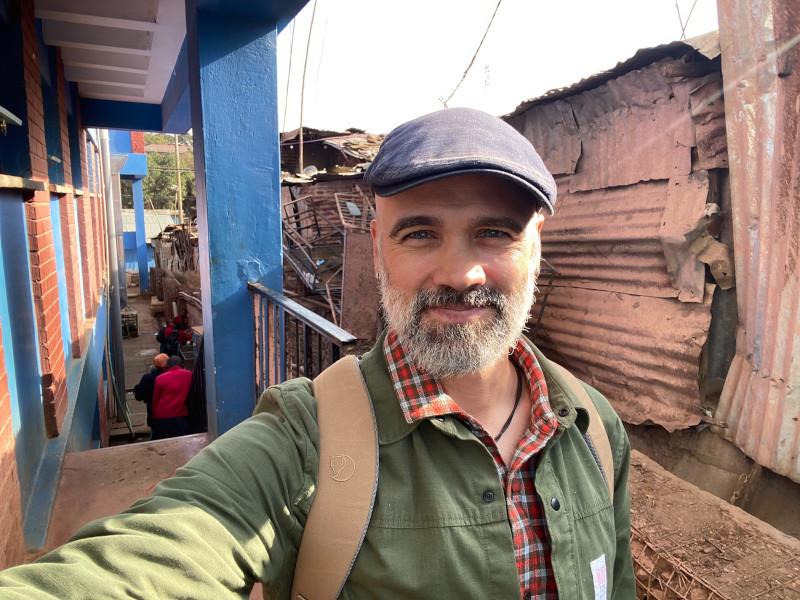
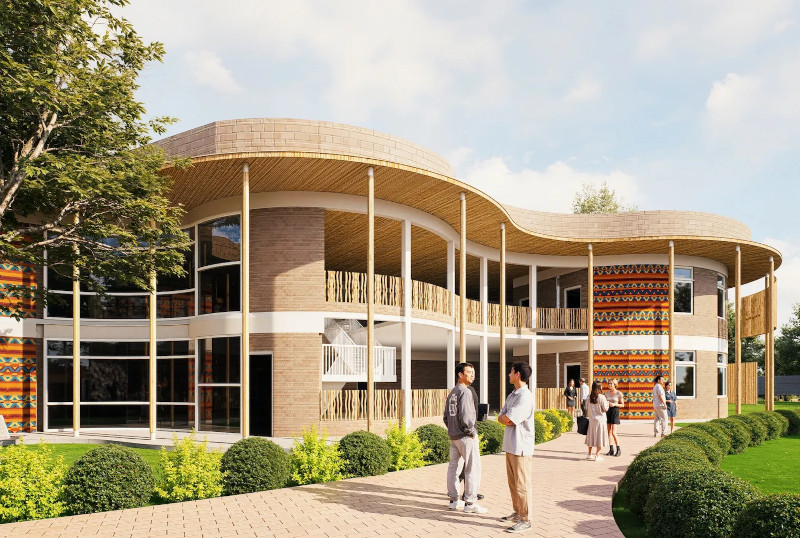
That question ultimately led him to help design Sankoré International School, a new mixed-income international school in Kenya that will welcome its first students in September 2026. The school represents a fundamentally different model for education in the region, one rooted in equity, sustainability, and deep community integration.
Laurits traces the origins of Sankoré back to his time teaching at a local Kenyan school, where he was approached by parents affiliated with SHOFCO, a nonprofit organization operating schools and community programs in Nairobi’s informal settlements. “They were running extraordinary schools,” Laurits explained, “but they weren’t sustainable. The schools relied on continual charitable giving, and with that unpredictability came real risk.”
The parents posed a series of ambitious questions: Could an international school be designed not for expatriates or the ultra-wealthy, but for Kenyans themselves? Could that school generate enough revenue to sustain itself and support education in the informal settlements? Could it challenge the rigid class structures reinforced by existing school systems?
“Everyone who has ever taught has thought, ‘If I could design my own school, I’d do things differently,’” Laurits reflected. “I’m not sure how many of us are foolish enough to actually try. Apparently, I am.”
What followed were years of collaboration, planning, and shared leadership. Laurits is quick to emphasize that Sankoré is not just his work, “There is no success alone. Ever,” he said. “Everything worth doing is worth doing in partnership.” He credits SHOFCO founders Kennedy Odede and Jessica Posner with leading the initiative and bringing together the team and expertise needed to turn a complex vision into reality.
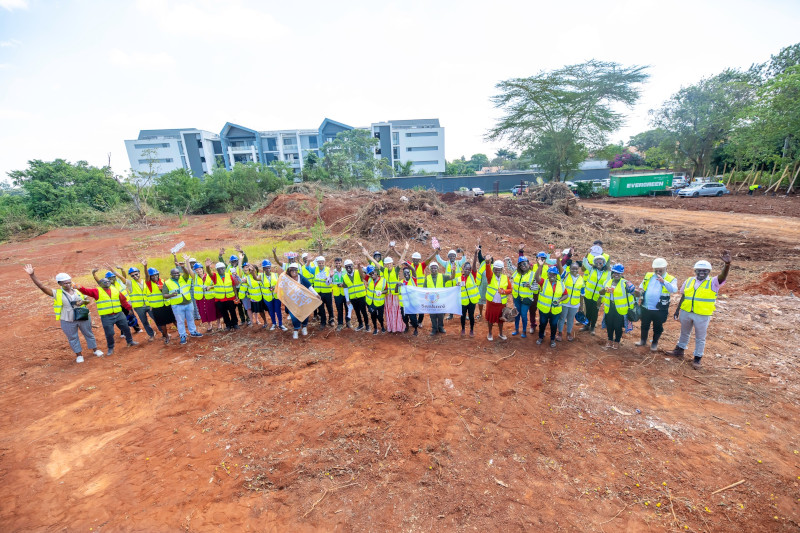
That vision recently crossed a major milestone when the Kenyan government approved Sankoré’s curriculum and construction officially began. “When you’re working in a system that runs very differently than the U.S., you never really know if any of it will materialize,” Laurits shared. “To break ground and receive national approval is unbelievable.” Still, he added, “What will be better is watching the first eight classes of students walk onto campus.”
Sankoré International School will be one of only a handful of mixed-income international schools globally. Sixty percent of students will be fee-paying, while forty percent will come from the informal settlements SHOFCO serves. Laurits believes the timing of shared education matters just as much as access. “Students arrive together in preschool before they are old enough to internalize socioeconomic differences,” he said. “By the time the world suggests they should not be hanging out with each other, they just scoff.”
The realities the school must navigate are significant. Some students will return home to villas, others to tin huts without electricity or running water. Building community across those differences requires intentional design, from uniforms and classroom norms to parent communication strategies across languages and technologies. “The learning happens when the community functions,” Laurits noted.
At the core of Sankoré’s curriculum is a simple but powerful philosophy: “Good with ideas, good with concepts, good people.” Knowledge, Laurits explained, is built through integrated skill development and character stewardship. The curriculum is transdisciplinary, social, and deeply contextualized to Kenyan culture. “It’s where the physical savannah meets the silicon savannah,” he said. “Product is always produced, and the work is rooted in real-life problem solving.”
One example is a long-term partnership with a local conservancy. Students return year after year, progressing from learning about local ecosystems to facilitating community peace-building conversations between herders and tourism operators. “These consequences are real,” Laurits said. “Our students will be creating lasting peace.”
Laurits credits his time at CEHD with giving him the confidence to pursue such an audacious path. “My experience in CEHD was nothing short of transformative,” he shared. “I learned how to truly see a child, how to support their growth, and how to facilitate the development of future leaders.” He described his professors as people who “believed in me” and constantly pushed him to refine his thinking.
He recalls informal hallway conversations with Professor Lois Groth as especially formative. “I called them my ‘Groth Spurts,’” he said. “Short brainstorms about students, ideas, and research.” That culture of support extended across the college. “There wasn’t a single professor I wouldn’t have felt comfortable reaching out to,” Laurits noted.
Today, Eric continues that legacy as an adjunct faculty member in CEHD’s Elementary Education program. While his current role as SHOFCO’s Director of Communications keeps him connected to Sankoré, teaching allows him to stay grounded. “Teachers are my people,” he said simply. “Serving as an adjunct keeps me connected, smiling, and hopeful. But I do miss the kids.”
When asked what advice he offers CEHD students and alumni considering bold paths, Laurits does not hesitate, “If it isn’t terrifying, there’s probably a good chance it’s not worth doing.” He shares, “The only way to empower children is with the bold and unconventional. If you want them to change the world, lead by example.”
Through Sankoré International School, Eric Laurits is doing exactly that.