
CEHD Dean Ingrid Guerra-López Calls for a Redefinition of Education in the Age of Intelligent Work
December 4, 2025
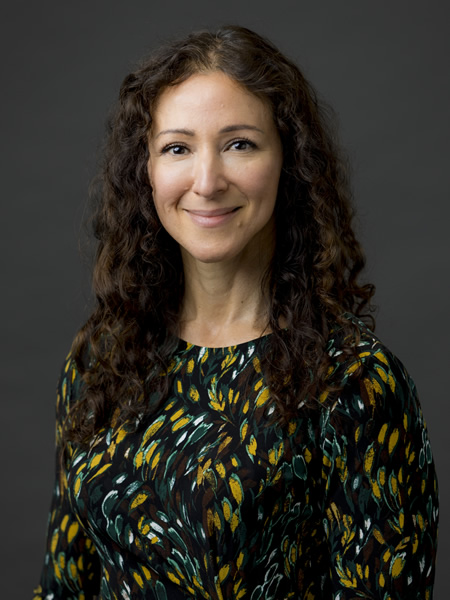
CEHD Dean,
Ingrid Guerra-López
Photo by John Boal Photography
In an era marked by the convergence of artificial intelligence, data science, and rapid workplace transformation, Ingrid Guerra-López, Dean of the College of Education and Human Development at George Mason University, delivered a powerful call to action at the prestigious Cosmos Club in Washington, D.C. Addressing an audience of distinguished scholars, scientists, policy leaders, and educators, she challenged institutions to move beyond incrementalism and embrace a bold reimagining of learning ecosystems.
"We are not simply responding to a wave of new technology tools," she stated. "We are living through a shift in what it means to be prepared for the future, and what it means to create value in society."
Guerra-López cautioned against narrowly defining education as a skills pipeline for technical jobs, arguing instead for a broader mandate grounded in discernment, adaptability, and lifelong learning. Drawing on her leadership experience, global labor trends, and scholarship in systems thinking, she framed this as an adaptive challenge that requires redesigning both the purpose and the structures of education.
"We cannot afford to spend decades refining outdated models while the world transforms around us," she said. "The pace of change demands thoughtful and agile forward-looking action."
She described how intelligent systems are already reshaping work across sectors, from healthcare to education to the arts, and noted that higher education must position itself not as a passive responder, but as a leader in designing future-ready ecosystems.
This vision is already taking shape at George Mason through initiatives like the ACCESS Academy, a lab school co-developed under Guerra-López’s leadership in partnership with Loudoun County Public Schools and Northern Virginia Community College. ACCESS provides students in grades 9–12 with an innovative pathway that bridges high school, college, and career preparation—not only in information technology, artificial intelligence, and robotics, but also through a strong emphasis on problem-based learning, communication, and collaboration.
"ACCESS reflects what happens when K–12, higher ed, and industry come together to co-design purposeful and accessible pathways for learners," she said. "It’s not about speeding students through a pipeline. It’s about creating coherence, relevance, and real opportunity across a lifetime of learning, working, and citizenship."
She also emphasized the importance of leadership and governance models that align with this vision. "Transformative change can’t be imposed, but it can’t be endlessly deferred either. Faculty and staff bring essential insights, but leaders have a responsibility to connect the broader dots across policy, finance, workforce, and social impact."
In closing, Guerra-López argued that framing education as a choice between liberal arts and technical skills misses the point, and that the real challenge is cultivating the full range of human capacity in an age of intelligent systems.
"Our challenge isn’t just to adapt to change," she said. "It’s to help shape it with integrity, with clarity, and with an unwavering commitment to the public good."