
Learn more about...

Building Schools Where Every Student Has a Champion
March 2, 2026
By Kiersten Caputy
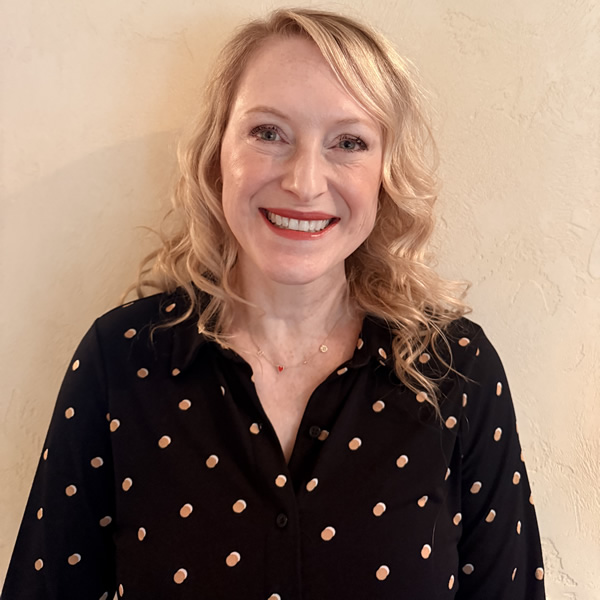 Brooke LeVecchi
For Brooke LeVecchi ’04 MA, ’17 MEd, education has always been about advocacy. Not because she was surrounded by educators who changed her life, but because she often felt the absence of that kind of support as a student herself.
“Growing up, I was not a strong traditional learner and often needed a champion,” LeVecchi reflected. “Someone to recognize my strengths, advocate for me, and believe in my potential.” That experience stayed with her and ultimately became the driving force behind her decision to enter education and, later, education leadership. Her goal has always been clear: to change the experience for students like her by creating schools where every learner feels seen, supported, and challenged.
Education was also deeply embedded in LeVecchi’s family life. Her father spent 50 years as a high school counselor and school counseling director and continues to serve Prince William County Public Schools as a substitute counselor. Her mother taught health and physical education, later moving into early elementary classrooms before returning to elementary physical education. LeVecchi remembers spending summers in their schools, spaces she recalls as “positive, welcoming, and meaningful,” and environments she knew she wanted to be part of in her own career.
While her parents’ careers showed her the impact educators can have, LeVecchi’s own student experience reinforced “the critical importance of advocacy, relationships, and systems that truly support diverse learners.” Together, those influences shaped her belief that schools must intentionally create environments where students feel supported, and teachers are empowered to do their best work.
Now in her 25th year as an educator with Prince William County Public Schools, LeVecchi has built a career grounded in that belief. She spent 13 years as an instructional technology coach, a role that allowed her to collaborate with staff across a school, support students, partner with families, and influence instructional practice at a systems level. Through that work, she saw how leadership could amplify impact well beyond a single classroom. “I realized I wanted to lead my own school,” she said. “I saw how strong leadership, coherent systems, and a clear vision could amplify advocacy and impact.”
To prepare for that next step, LeVecchi returned to George Mason University’s College of Education and Human Development (CEHD), completing her Graduate Certificate in Education Leadership in 2017 after earning her undergraduate degree in 2004. Her experience in CEHD was formative. “The Education Leadership program at CEHD was instrumental in shaping how I lead today,” she shared. “The program emphasized both theory and practice, pushing me to think deeply about equity, systems, and instructional leadership while grounding that learning in real-world application.”
Through coursework and field-based experiences, LeVecchi strengthened her ability to analyze data, identify root causes of instructional challenges, and design student-centered solutions. The program’s focus on equity pushed her to examine the structures that influence access and opportunity, rather than relying on surface-level interventions. “Through collaborative projects, coaching conversations, and problem-based learning, I gained experience facilitating meaningful dialogue, building collective ownership, and supporting teacher growth,” she said. Those experiences continue to inform how she leads collaborative learning teams, implements coaching cycles, and fosters a culture of continuous improvement.
Now, LeVecchi is preparing to open a brand-new elementary school in the Woodbridge area for the 2026–2027 school year, a role that brings both excitement and responsibility. “What excites me most is the opportunity to build a school community from the ground up, intentionally and collaboratively,” she said. “From the vision and values to the traditions, systems, and culture, we have the rare opportunity to be thoughtful about every decision.”
She is especially energized by the chance to support and develop a new team. “There is something powerful about bringing together educators who are eager to learn, collaborate, and shape something meaningful together,” LeVecchi noted. “Creating trust, shared ownership, and a clear sense of purpose early on sets the foundation for long-term success.”
At the heart of her leadership philosophy is a commitment to relationships and trust. “Strong leadership is rooted in relationships, trust, and clarity of purpose,” she explained. “Leadership is not about having all the answers, but about creating the conditions where others feel empowered to do their best work.”
She also believes effective leadership balances high expectations with high support. “Teachers need autonomy alongside guidance, feedback, and resources,” she said. “Students thrive when they are challenged academically while feeling safe, valued, and known as individuals.”
Community engagement is another cornerstone of LeVecchi’s approach. As the school prepares to open, she is prioritizing early, consistent communication with staff, families, and community partners. With boundaries not finalized until early 2026, she recognizes the importance of transparency and trust-building. “Engagement is essential to building a strong, connected school community,” she shared. “Early communication and meaningful collaboration will ensure the school reflects the values and strengths of the community it serves.”
LeVecchi is candid about the challenges ahead. “Opening a new school comes with the challenge of establishing systems, routines, and relationships quickly,” she said. Still, she approaches these challenges with a student-first mindset. “No challenge is too difficult to overcome when there is trust, time, and collaborative problem-solving.”
For Brooke LeVecchi, leadership is about service and impact. Grounded in her CEHD experience and guided by a deep commitment to equity, she is building a school where students have champions, teachers feel valued, and communities come together to create environments where every learner can thrive.