
Answering the Call: How CEHD Students are Redefining the Path to the Classroom
January 26, 2026
By Kristine Hojnicki
Across the country—and especially in Northern Virginia—classrooms are feeling the strain of a national teacher shortage. More than 86% of U.S. public schools report difficulty filling open roles, and in Virginia alone, nearly 3,700 teaching positions went unfilled in a single year. In the region where George Mason University graduates serve, shortages are most acute in elementary education, middle grades, and special education environments, leaving many students without the stable, skilled teachers they deserve.
George Mason’s College of Education and Human Development (CEHD) — alma mater to one-third of the region’s teachers and more than half of the administrators in Northern Virginia school districts — is stepping forward with the Future Ready Teachers initiative, a bold effort to remove barriers, elevate the profession, and strengthen the next generation of educators.
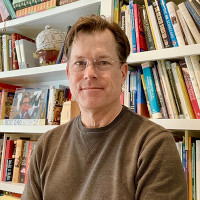
Bill Carpenter
For students like Bill Carpenter, a second-career teaching candidate in George Mason’s secondary education master’s program, the call to teach is both personal and purposeful. His resilience, passion, and commitment to public service reflect the motivation that is urgently needed to rebuild the educator pipeline.
From Health Administration to High School History
For Bill Carpenter, the road to the classroom has been a winding one. Now enrolled in the Master’s in Teaching program for Secondary Education (Biology), he spent the first part of his professional life in a very different world. He holds a Ph.D. in health services research and served on the faculty at UNC-Chapel Hill before stepping back to manage some of his family’s needs.
“I had long been interested in teaching,” Carpenter said. “When I was young, people actively dissuaded me from it. But once I stepped into the classroom, I knew I didn’t want to let that guide my life anymore.”
That classroom he refers to was at a private school in Virginia Beach where his family had recently relocated. Initially a substitute position, it quickly turned into a full-time role teaching U.S. History, even though Carpenter’s academic background was in biology and cancer research.
“I fell in love with it,” he explained. “I didn’t really care about the prior forces in my life that said don’t be a teacher. It just felt too right.”
Four years later, a family move to Northern Virginia brought new clarity. If he was going to make teaching his second career, he wanted formal preparation—real, research-driven professional training. A program he had explored previously told him he “didn’t fit their model,” a response that left him discouraged but also determined. George Mason, he said, changed everything.
“Within about the third week of the program, I thought, ‘This is right,’” Carpenter said. “The faculty meet you exactly where you are. They see your strengths, your past experiences, and they help you use all of that to become the teacher you want to be.”
As someone who has taught graduate-level clinicians and researchers, Carpenter is the first to say that teaching teenagers requires a different set of skills.
“Anybody can deliver a lecture,” he explained. “I came to this program to learn the ‘non-content skills.’ I want to understand how to engage students and manage the classroom dynamic.”
Carpenter views his future role as more than just an instructor. He wants to be a stabilizer in a complex world. “I reflect on a couple of students who I taught before and they called me their ‘trusted adult.’ That resonates with me,” he said. “To be somewhat of a Sherpa for a student who’s trying to figure life out would be a privilege.”
A Shared Commitment to Rebuilding the Educator Pipeline
For CEHD, the teacher shortage isn’t an abstract statistic — it’s a reality felt in every partner district. Schools report classrooms rotating through substitutes, unfilled critical roles, and young teachers who leave the profession long before they planned to. As the largest producer of educators in Virginia, George Mason sees both the urgency and the responsibility as well as the opportunity.
The Future Ready Teachers initiative grew from that commitment. Instead of accepting the shortages as inevitable, CEHD is working to remove the financial and structural barriers that keep talented people from entering and staying in the profession. The rise in living costs, unpaid student teaching requirements, licensure fees, and long commutes often derail even the most dedicated future teachers.
Future Ready Teachers directly tackles those obstacles through expanded scholarships, cost-of-living support, strengthened mentoring, and deeper partnerships with local school districts. The initiative also works to reframe teaching as a purpose-driven career—one worthy of the region’s brightest students.
The result is a stronger, more inclusive pipeline that welcomes career changers like Bill Carpenter, and others whose experiences reflect the diversity of today’s classrooms. George Mason isn’t just looking to fill vacancies. It’s helping to rebuild a stable, supported educator workforce that will shape the future of every child in Virginia.